
Real, sustainable gTLD growth isn’t born from a flashy marketing campaign. In the fast-moving world of generic Top-Level Domains (gTLDs), the loudest launch is rarely the most durable bet. We’ve all seen the fireworks: massive registration spikes, celebrity endorsements, and breathless headlines heralding the “next big thing” in digital real estate. It’s a great show, but it often masks a shaky foundation. Real, sustainable gTLD growth isn’t born from a flashy marketing campaign; it’s a quiet, deliberate process built on genuine, real-world utility.
This analysis is for senior decision-makers seeking to understand what truly drives long-term value. The central thesis is simple: the most durable gTLDs often scale quietly by design, prioritizing substance over spectacle.
In the gTLD space, it’s easy to mistake noise for a signal. The classic “launch spike” – a dramatic, short-term surge in registrations fueled by rock-bottom promotions and speculative land rushes – is the sugar rush of the domain industry. A gTLD like .xyz or .icur might offer domains for a buck, leading to tens of thousands of registrations overnight. On paper, it looks like a runaway hit.
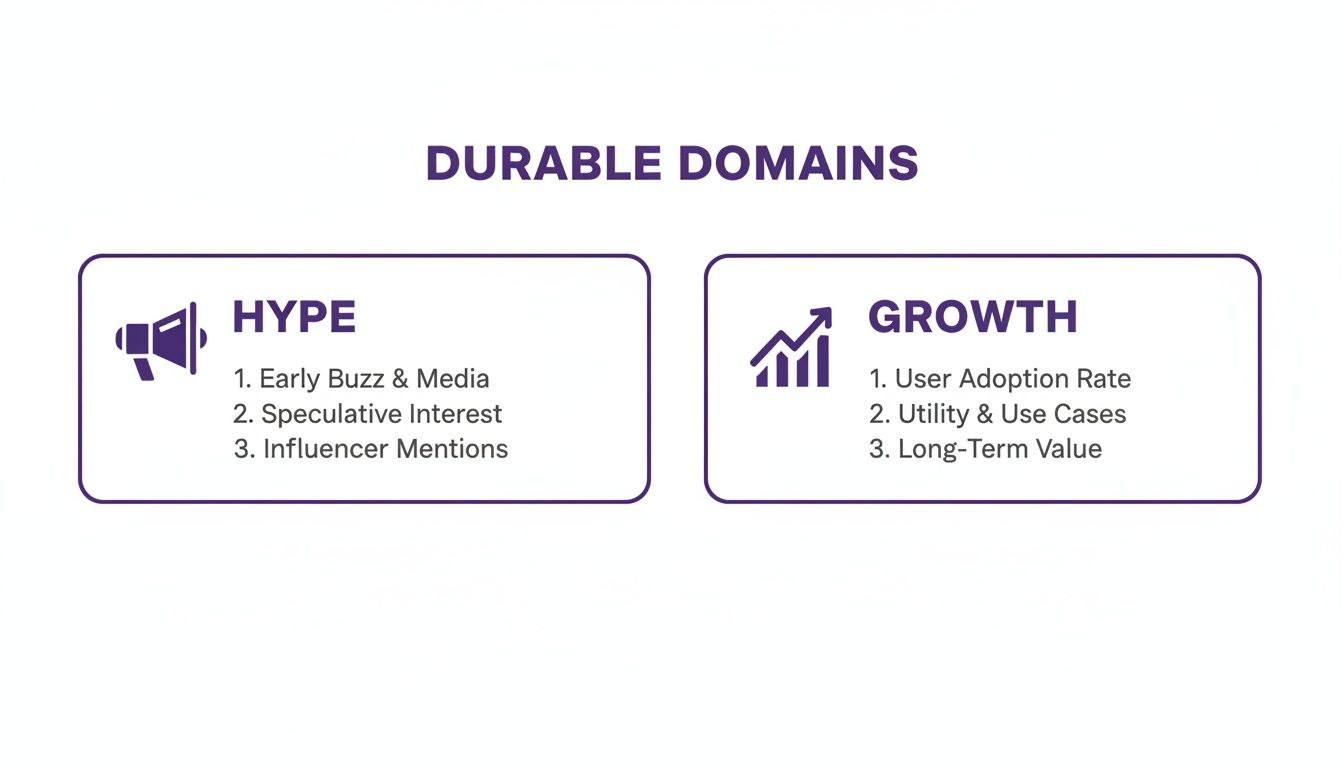
But this kind of hype is a notoriously poor predictor of genuine gTLD growth. The real story isn’t the loud launch; it’s the quiet, steady climb that follows- or, more often, doesn’t. Think of it as the difference between a blockbuster movie’s opening weekend and a classic film’s enduring legacy. One is a flash of high-volume attention; the other represents sustained, organic demand built over time. The real test comes months later when the promotional period ends and the renewal bills go out. Hype is a poor predictor of sustainability because it attracts the wrong audience for the wrong reasons.
This infographic breaks down the core differences between fleeting hype and durable gTLD growth.
Registration numbers are just the cover of the book. Activation is the real story inside. The raw count of registered domains is easily one of the most misleading metrics available. It’s a vanity number that tells you almost nothing about the health or long-term potential of a TLD.
The true barometer of a TLD’s strength is activation – the actual, tangible use of a domain name in the wild. A domain sitting idle in a speculator’s portfolio contributes nothing to the ecosystem. It’s a library filled with beautiful, unread books collecting dust. In contrast, a single domain actively powering a business, hosting a project, or managing communications is a powerful signal of genuine value. This is where a strategic focus shifts from how many to what for.
Sustainable gTLD growth is driven by activation, retention, and real-world utility – not launch volume.
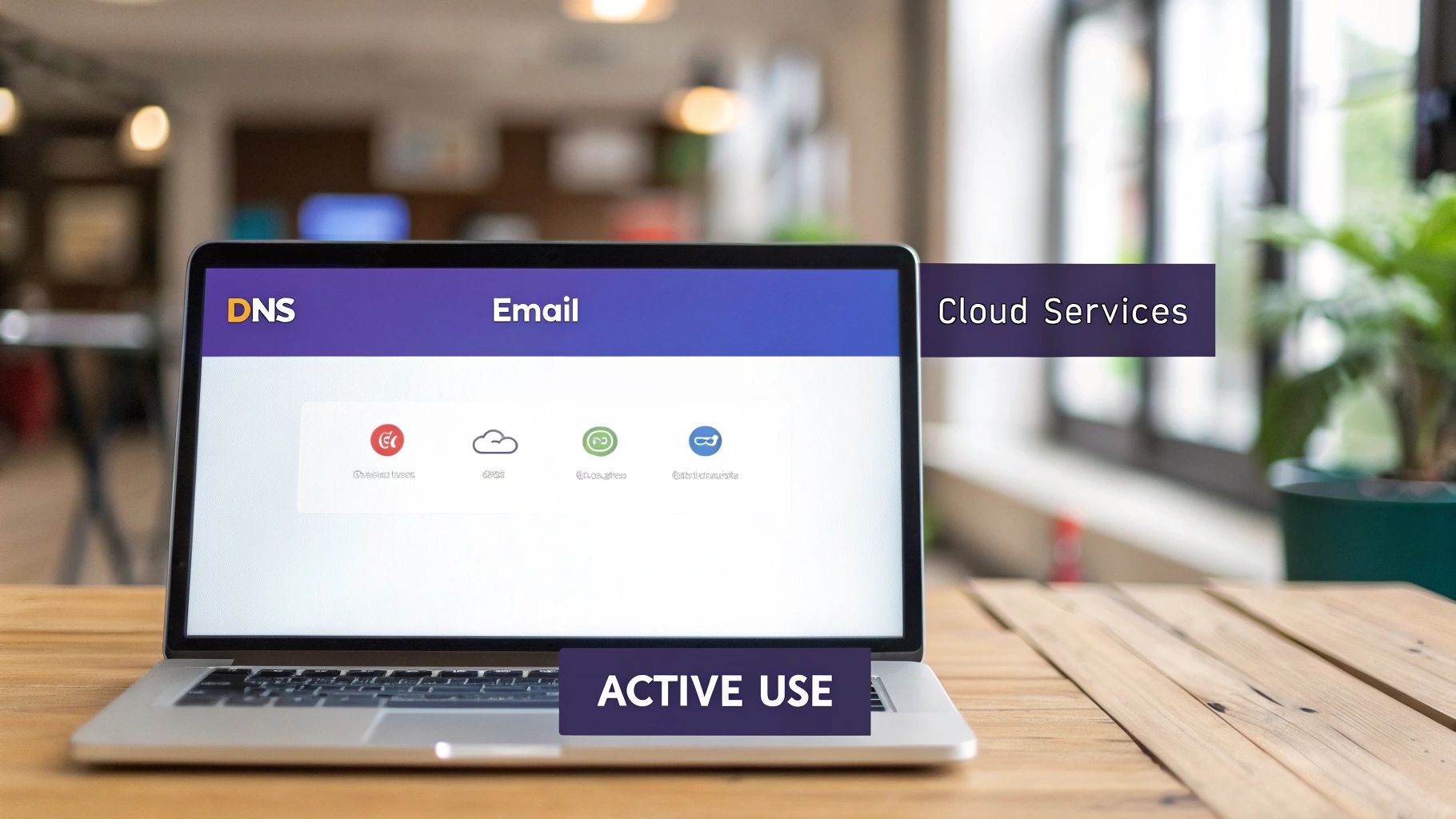
The first, most fundamental signal of activation is DNS resolution. Does the domain actually point to a server? Another critical signal is email usage. When a domain has MX (Mail Exchanger) records configured, it means the owner plans to use it for professional communication – a huge indicator of business integration. Other usage indicators that matter more than raw volume include:
.io and .dev - it signals deep technical integration.blog.example.store) shows the domain is a foundational asset.These signals reveal intent over volume. For those managing brand-specific TLDs, you can learn more about measuring success with your brand’s TLD to apply these same principles. A TLD’s health isn’t measured in the number of domains sold, but in the number of problems being solved on those domains.
Acquisition gets all the attention, but retention builds empires. When analyzing gTLD growth, the renewal rate is the single most powerful indicator of a gTLD’s real value. High retention is the ultimate proof that a TLD is genuinely useful. It means registrants are getting enough continuous value to pay the renewal fee year after year, long after the initial discount has faded. It’s the market’s way of saying, “Yes, this TLD actually solves a problem.“
On the flip side, high churn is a massive red flag. Churn patterns signal fit and utility. A massive drop-off after the first year means initial sign-ups were driven by price, not value. Steady, high attrition points to a deeper problem with the TLD’s positioning. Low and stable churn – the signature of a well-run, niche extension like .law or a community-focused one like .art - is the goal. Quiet retention always beats loud acquisition. The math is simple: it always costs more to acquire a new customer than to keep an existing one.

A retention-first approach also creates a positive feedback loop. A solid base of loyal users builds a strong community, which naturally attracts more high-quality registrants. This is a central idea behind building a community with custom top-level domains. For investors and executives, the takeaway is clear: the real story is told in the renewal data one, two, and five years later.
Success in the gTLD space often whispers instead of shouts. While the industry fixates on flashy launches, the most durable examples of gTLD growth are found in extensions that scale methodically, far from the spotlight. These quiet giants don’t rely on hype. Instead, they depend on disciplined execution across three core pillars: distribution, pricing, and positioning. Their common trait is execution consistency over attention-grabbing tactics.
Think about the laser-like focus of gTLDs like .dev or .app. They never tried to be everything to everyone. Instead, they aimed squarely at the developer community, offering a TLD that acts as a badge of identity. Their growth wasn’t explosive. It was intentional, built on credibility within a niche that values authenticity over advertising.
This disciplined approach is reflected in their distribution. Instead of chasing volume through endless promotions, they build strategic channels, such as bundling with hosting packages or website builders. This reduces friction and targets users with high intent. Their pricing is also based on value, not discounts, which cultivates a healthier, more committed user base. This is especially critical as projections show the global domain market hitting 364.3 million domains, with new gTLDs and ccTLDs driving much of the future expansion. You can discover more insights about these global domain market trends and what they signal for the future.
The lesson is that methodical execution beats fleeting attention every time. For an excellent case study on this principle in action, you might be interested in the success of the .kids TLD, which focused on a clear, defensible niche.
Sustainable scale is built, not launched. The most valuable and durable gTLDs achieve long-term gTLD growth quietly by solving real problems for specific communities. They prioritize substance over sizzle, focusing on activation, retention, and consistent execution. The best gTLDs grow quietly because they fit real needs.
For executives and investors, the takeaway is clear: the real signal isn’t in the launch – it’s in what happens after. The ability to look beyond registration spikes and evaluate activation, retention, and real-world usage is what separates a high-potential asset from a short-lived trend.
The question isn’t how loudly a gTLD launches. It’s whether it continues to earn its place in the market over time.
If you’re evaluating a gTLD strategy ahead of the next ICANN application window, the most important work happens before the application is even submitted – aligning your model with how real adoption actually happens.
Most gTLD initiatives fail before the application is even submitted.
If your organization is considering a gTLD, the most important work happens before the application window opens.
The question is not whether utility-driven gTLDs make sense in theory.
It’s whether your proposed model aligns with how digital identity actually functions in a mobile-first world.
We offer a short, signal-based readiness conversation for teams evaluating a new gTLD ahead of the ICANN application window opening in April 2026. It’s designed to pressure-test assumptions around model fit, adoption constraints, and long-term viability – before capital and credibility are committed.
Ready to turn your domain idea into a strategic digital asset? At TLDz, we provide end-to-end advisory services to build and scale your TLD with a focus on sustainable growth. Book your free consultation today.