
Domain pricing isn’t about pulling a number out of a hat. It’s one of the most critical strategic decisions you’ll make for a gTLD, and it can determine long-term success or failure. Figuring out your domain pricing isn’t about pulling a number out of a hat. It’s one of the most critical strategic calls you’ll make, and it can literally make or break your gTLD’s future. The right model connects with your target market and distribution partners to fuel growth, while the wrong one can kill adoption before you even get off the ground.
This is where many domain pricing strategies fail. Many registry operators get seduced by the alluring myth that a short list of ultra-premium domain names is a lottery ticket to instant profitability. Effective domain pricing is not about maximizing short-term revenue. The fantasy goes something like this: sell business.shop or crypto.club for a few million, and you’ve bankrolled the entire operation. This “get rich quick” thinking is precisely why so many promising gTLDs fizzle out. It reduces pricing to a simple lever you pull for revenue.
But pricing isn’t just a lever – it’s a critical component of system design. A winning strategy isn’t something you tack on at the end; it’s woven into the very DNA of your gTLD’s purpose, its value, and how you plan to take it to market. A pricing failure is almost always a design failure. The market isn’t rejecting your price; it’s rejecting a system that is misaligned with its needs.
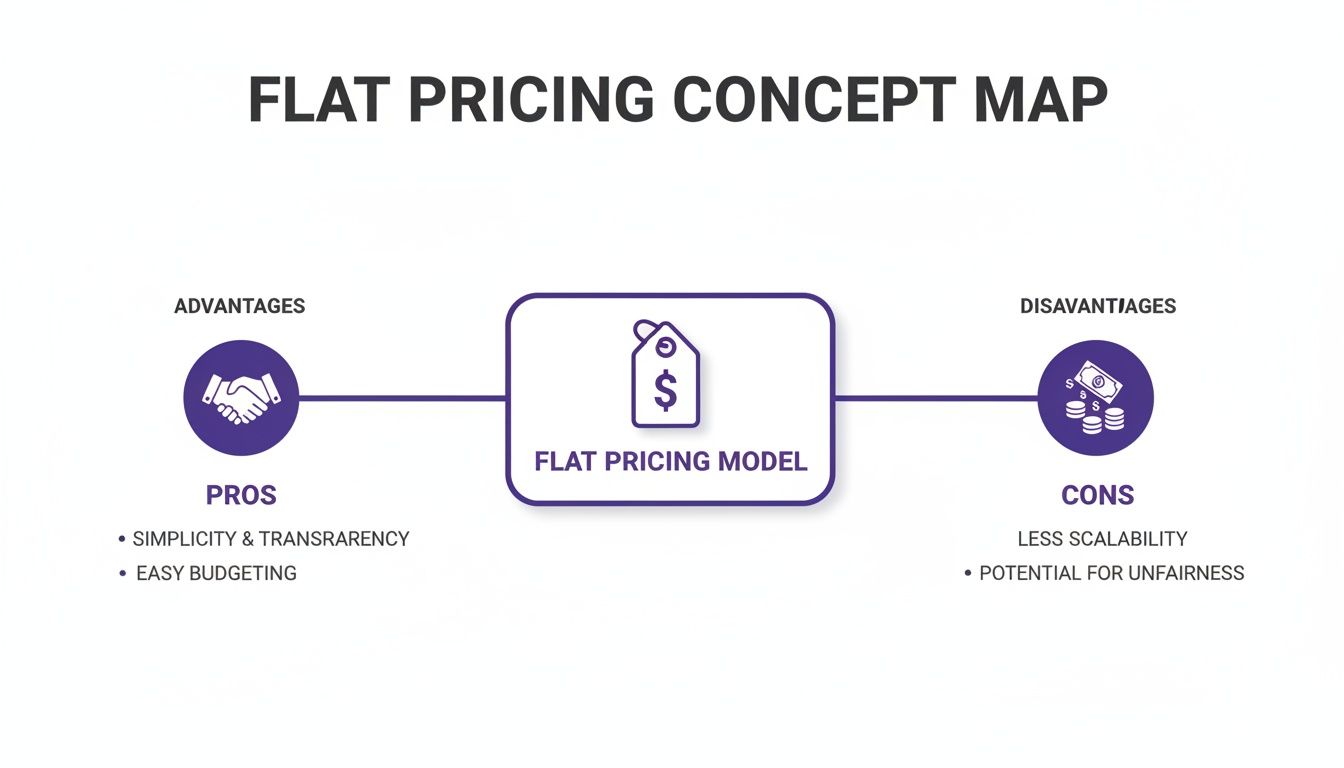
The flat pricing model is the classic “one price fits all” approach. It’s clean, simple, and beautifully predictable. Everyone pays the same for any available domain, whether it’s a-very-long-and-specific-domain.lol or a gem like magic.lol.
A strong domain pricing model aligns with the realities of market segmentation, not just simplicity. This model’s biggest draw is its sheer simplicity. For registrars, it’s a breeze to integrate and market. For end-users, it’s transparent. This low-friction strategy can be incredibly effective for driving mass adoption. A flat price sends a clear, democratic message: “all names are created equal,” making it a potent positioning tool for community-building gTLDs like .dev or .app, where a single, reasonable price point removes barriers and encourages experimentation. The goal isn’t squeezing every dollar out of individual sales; it’s building a vibrant, active user base.
But this beautiful simplicity comes with a hidden, and often enormous, cost: it completely ignores market segmentation. By treating every domain like a bulk commodity, you’re forced to accept a massive opportunity cost. A single price low enough for mass adoption is far too low for high-value keywords. Conversely, a price high enough to capture the value of premium names will scare away nearly everyone else. It’s like trying to sell every house in a city for the same price. The tiny starter home would be wildly overpriced, while the downtown penthouse would be the steal of a lifetime. This forces a painful trade-off between volume and value – a strategic straitjacket that prevents you from capturing the true economic potential of your most valuable digital assets.
If flat pricing is the simple, straightforward approach, the premium-heavy model is its high-stakes, ambitious cousin. This strategy involves carving up a TLD’s domain inventory into different tiers – think ‘Standard,’ ‘Gold,’ and ‘Platinum’ – based on keyword value, length, or search volume. The logic seems solid: why not capture the maximum possible value from your best digital real estate right away?
On paper, it’s a direct line to profitability. You find a few hundred killer names, slap five or six-figure price tags on them, and wait for the big checks to roll in. The problem is, this strategy often creates a digital ghost town. As industry data from ntldstats shows, many TLDs struggle to scale. Consider that as of April 2026, 55% of open TLDs have fewer than 10,000 domains under management – a clear sign of suppressed scale. When the most desirable and memorable names are locked away behind sky-high prices, you kill organic growth before it can start.
This creates a cascade of problems: low adoption, weak network effects, and registrar disinterest. Relying on premium sales is a bet on upfront revenue at the expense of sustainable, recurring income. TLDs like .cars or .rich launched with aggressive premium pricing, and while they secured some high-profile sales, they failed to build a broad base of everyday users, crippling their long-term viability. A healthy TLD needs a population of citizens, not just a handful of wealthy landlords.
So far, we’ve treated the domain as the final product. But what if it’s just the beginning? Bundled pricing models change the game, shifting the conversation from selling a digital address to delivering an integrated solution. This strategy involves packaging a domain with essential services the end-user already needs, like hosting, a website builder, or professional email.
Imagine a gTLD like .photo that doesn’t just sell you a domain but includes a starter package of cloud storage and a portfolio website builder. Or .legal, where registration comes with a subscription to a basic case management tool. Suddenly, the domain becomes one component of a much larger, more valuable transaction. This radically alters a customer’s willingness to pay. The purchase is no longer a discretionary branding expense but an investment in core business infrastructure.
The biggest win is the impact on customer retention. When a domain is just a standalone product, churning is easy. But when it’s tied to their professional email or business software, the switching costs become immense, creating a powerful incentive to renew. This alignment makes your gTLD stickier and far more resilient to competition, turning it from a simple commodity into an indispensable service.

Let’s take the idea of bundled services a step further and look at the “SaaS-ification” of the domain name. The logic here is brutally simple, yet often missed: if you want recurring revenue, you have to deliver recurring value. The annual renewal fee can’t just be a tax to keep the lights on; it must connect directly to a clear, ongoing benefit.
A subscription model shines when the gTLD is tied to an ongoing service. It’s not about tacking on a third-party tool. It’s about making the domain itself the key that unlocks continuous value.
In each case, the user isn’t just renewing a name, they’re maintaining access to a vital, evolving service. The recurring payment becomes an easy decision.
On the flip side, this model crashes and burns when a registry just slaps a high, subscription-style renewal fee on a domain without delivering any sustained benefit. If the main value of a domain is as a one-time brand asset – a piece of digital real estate – a high recurring fee will feel like extortion. A user might pay a premium to acquire mybrand.tld, but they will refuse to pay a steep price every year just to hold onto it. When you operate a gTLD, renewa rates are one of the most critical metrics. They serve as a direct indicator of a registry’s long-term health. Any pricng model that creates friction at the first-year renewal point is setting itself up for failure.
Ultimately, domain pricing is a system design decision, not just a revenue lever. Great pricing isn’t an afterthought – it’s a deliberate choice aligned with your gTLD’s purpose, audience, and distribution. When a pricing model fails, it’s rarely a market failure. It’s a design failure.
A premium-heavy strategy that chokes off adoption is a design flaw. A flat price for a market with diverse needs is a design flaw. And a subscription fee without recurring value? That’s a promise that doesn’t match reality. Registry operators and investors need to stop thinking like merchants and start acting like system architects. Your pricing structure is the blueprint for the digital community you want to build.
Evaluate Your Pricing Strategy First
Want to evaluate your pricing model?
Most pricing failures aren’t visible until after launch. Use the gTLD Pricing System Framework to pressure-test your assumptions across demand, pricing structure, and long-term viability.
If your organization is considering a gTLD, the most important work happens before the application window opens.
The question is not whether utility-driven gTLDs make sense in theory.
It’s whether your proposed model aligns with how digital identity actually functions in a mobile-first world.
We offer a short, signal-based readiness conversation for teams evaluating a new gTLD ahead of the ICANN application window opening in April 2026. It’s designed to pressure-test assumptions around model fit, adoption constraints, and long-term viability – before capital and credibility are committed.