
Even if your string is brilliant and your finances solid, one thing can sink your application fast: who you are. The ICANN gTLD background check 2026 is a mandatory, in-depth screening of your organization and its key leaders. It’s ICANN’s way of keeping bad actors out of the internet’s root zone before they hand over the keys to a piece of digital real estate.
Think of it as the final, non-negotiable interview where ICANN plays detective, and your corporate closet better be free of skeletons.
The ICANN gTLD background check isn’t just bureaucratic red tape; it’s a fundamental safeguard for the entire internet. At its core, the goal is to protect registrants, maintain public trust, and ensure the stability of the Domain Name System (DNS).
Imagine ICANN as the ultimate building inspector for the internet’s most valuable real estate. Before they grant a permit to build a new digital neighborhood – whether it’s a corporate headquarters like .brand, a bustling city like .app, or a quirky community like .ninja - they need to know the developers are legitimate.
ICANN reserves the absolute right to deny an otherwise qualified application if red flags appear during the gTLD applicant screening. This makes the ICANN eligibility criteria a strict, pass/fail test that can single-handedly decide the fate of your multi-million dollar investment.
The screening process exists to:
During the 2012 application round, several promising applications were rejected because undisclosed partners had prior fraud or cybersquatting findings. Transparency from the start would have saved them millions in application fees and years of effort.
This process scrutinizes everyone from the C-suite to major shareholders. As you plan your application, remember that the “who” is just as important as the “what.” Understanding the full scope of these checks is essential, and it’s a core component of the numerous legal considerations when applying for a new top-level domain.
These background checks are just one part of a much broader application process. For a complete, end-to-end view of how all the pieces fit together, see our Build a TLD: Ultimate Guide to Launching Your Own TLD.
So, ICANN is playing detective. What are they actually looking for? It’s less about catching you in a fib and more about making sure your organization and its leaders are fit to manage a core piece of internet infrastructure. Think of it as a financial audit and a character reference rolled into one, with the future of .yourTLD hanging in the balance.
The ICANN gTLD background check 2026 is a two-pronged investigation. It dives deep into the applicant organization itself and the key people steering the ship.
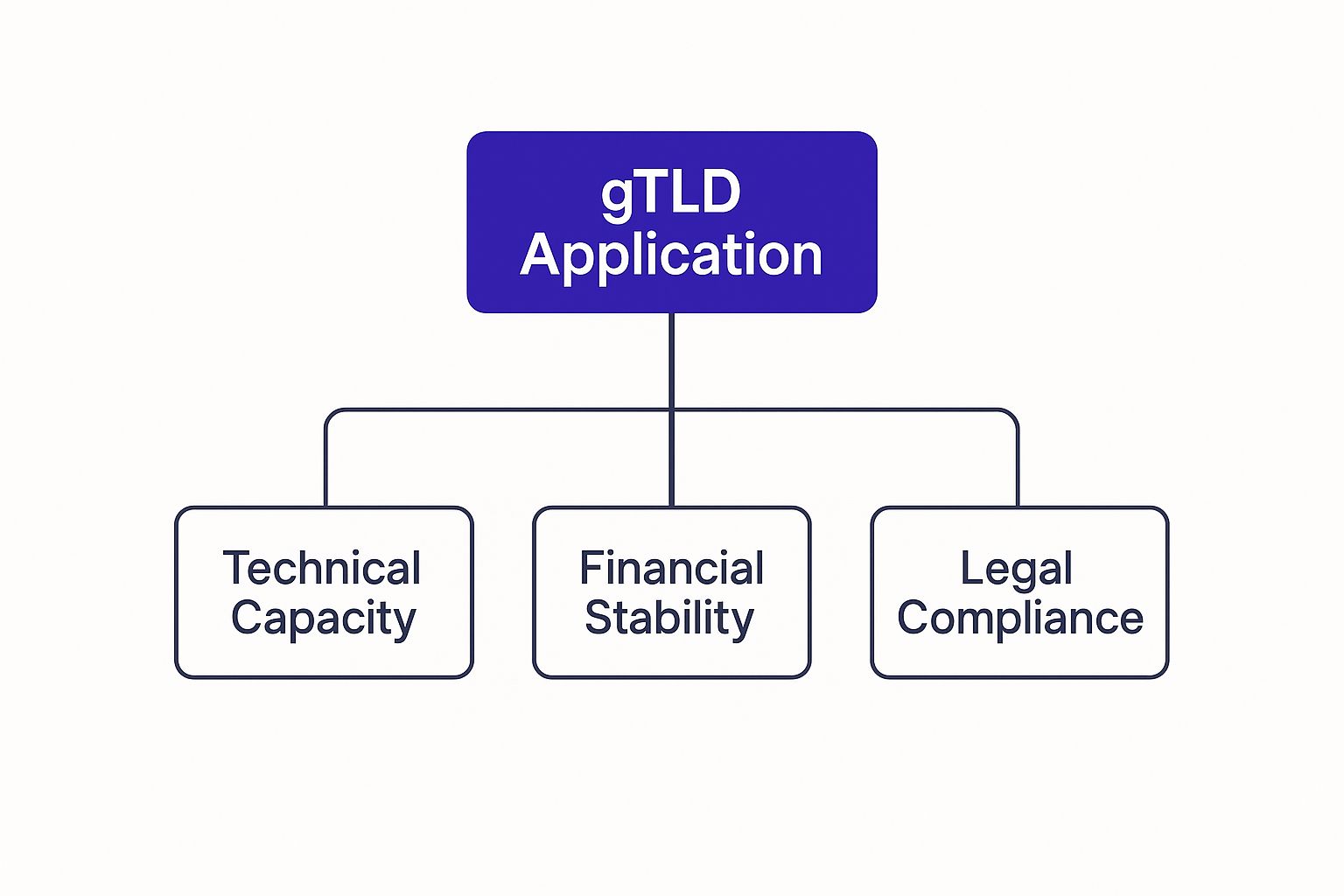
First up, ICANN puts your entire organization under the microscope. They need to see that you are who you claim to be and that your corporate structure is sound and transparent.
Get ready to provide:
Next, the magnifying glass turns to the people behind the curtain. The gTLD applicant screening gets personal, extending to anyone with significant influence.
The individuals in the hot seat typically include:
A huge part of this is the mandatory disclosure. Applicants must formally attest that no one in these key positions has recent convictions or misconduct in areas like corporate governance, fraud, breach of fiduciary duty, dishonesty, tax fraud, or perjury. Our complete guide to gTLD eligibility criteria for 2026 breaks down these requirements in more detail.
There is one small exception to this intense level of scrutiny. If your company is a publicly traded entity listed on one of the top 25 global stock exchanges, ICANN gives you a bit of a break. The logic is solid: these companies are already under the watchful eye of powerful regulatory bodies like the U.S. Securities and Exchange Commission (SEC). Their existing disclosure obligations mean they’ve already been heavily vetted, making the ICANN background screening process less invasive.
If you think the ICANN background check is just a black box where your application disappears, think again. It’s a methodical, if sometimes painfully slow, journey.

ICANN doesn’t handle these checks in-house. They submit applicant information to international background screening services. These firms start by digging through publicly available information – court filings, corporate records, you name it.
But here’s the kicker: ICANN can use information from any source, including public comments filed against your application. A disgruntled ex-employee or a competitor can easily turn a straightforward process into a bureaucratic nightmare.
When a screening firm flags something, the pressure mounts. ICANN will send formal “clarifying questions,” and a 21-day clock starts ticking. Miss that hard deadline, and your application can be put on ice indefinitely.
The main ICANN gTLD background check happens during the evaluation phase. But it’s not a one-and-done deal. The screening is a living process.
Any material change – like a new director, a shift in major shareholders, or a change in ownership – can trigger a whole new round of screening. This is why some applications from the 2012 round for TLDs like .music were stuck in extended evaluation limbo for years. Changes in ownership forced ICANN to hit the reset button, trapping them in procedural quicksand.
ICANN’s push for transparency extends to its technical side, too. The rollout of the Registration Data Access Protocol (RDAP) is a perfect example. On May 17, 2018, the ICANN Board required all gTLD registries and registrars to adopt RDAP, making domain registration data clearer and more accessible. You can learn more about RDAP’s background and implementation on ICANN’s website.
Getting a gTLD application through ICANN feels like prepping a ship for a long voyage. But there are hidden reefs just below the surface that can sink your application before it ever leaves the harbor.
One of the sneakiest pitfalls is “hidden history.” Remember that embarrassing UDRP decision against an executive a decade ago? ICANN hasn’t. A history of cybersquatting, UDRP/URS losses, or PDDRP decisions, even if it feels ancient, can derail eligibility.
When you submit your application, you’re handing over personal information to ICANN’s US-based screening services. You must ensure this data sharing meets local privacy laws like GDPR. Getting this wrong can bring your application to a grinding halt.
If there’s one thing that raises a giant red flag for ICANN, it’s a lack of transparency. Failing to properly disclose the ultimate controllers of your organization is one of the fastest routes to rejection. ICANN has to know who is really calling the shots.
Any of these issues can land you in “Extended Evaluation,” a costly and demoralizing process where your application just sits while everyone else sails past you.
The last gTLD round was a masterclass in what not to do. Several applicants failed because undisclosed partners had past fraud or cybersquatting findings. A little transparency early on would have saved them an incredible amount of time and money. The lesson couldn’t be clearer: honesty and proactive disclosure are your best friends.
Let’s stop talking about problems and start building solutions. The ICANN gTLD background check 2026 is tough, but you can transform this hurdle into a powerful demonstration of your organization’s integrity.
Finally, remember the technical side. ICANN has strict rules for ‘Name Collision’ mitigation to prevent new gTLDs like .corp or .home from conflicting with internal networks. These can mandate a blocking period of at least 90 days for certain names. You can discover more about these technical requirements on ICANN’s site.
Don’t leave your gTLD application to chance. TLDz offers end-to-end advisory services to navigate every aspect of the ICANN process, from initial strategy to passing the background check with confidence – https://tldz.com